

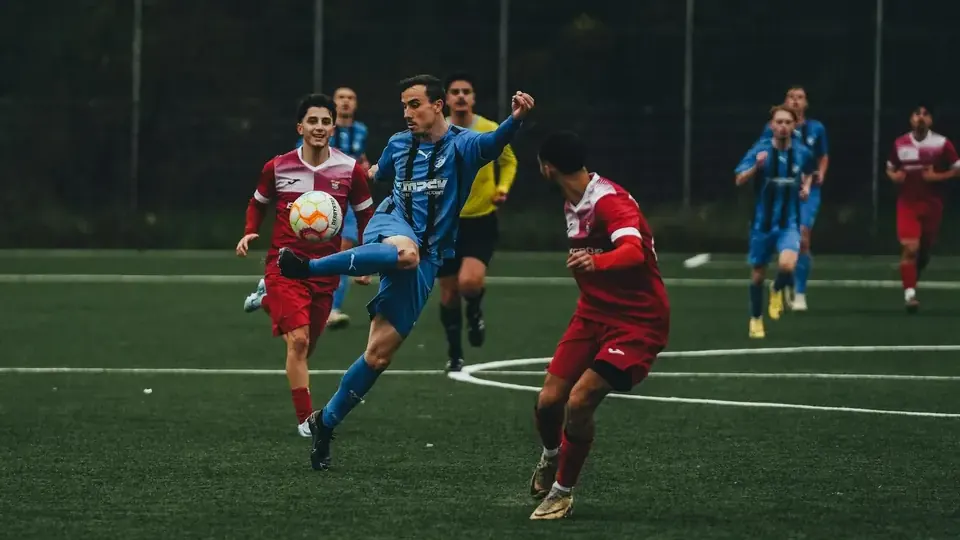
Counter-pressing, often called gegenpressing, is the art of winning the ball back within seconds of losing it. For Chelsea, a club that has cycled through multiple managers and tactical philosophies in recent seasons, the ability to execute a coordinated counter-press has become a defining measure of the team's discipline and fitness. This glossary breaks down the core drills, concepts, and terminology used at Cobham to train this high-intensity skill.
### Ball-Oriented Pressure
A principle where the nearest Chelsea player to the ball immediately engages the opponent after a turnover. The drill focuses on sprint distance and angle of approach. Coaches emphasize that the first presser should force the ball carrier toward a sideline or a waiting teammate, not just chase blindly.### Trigger Moment
The specific event that initiates the counter-press. Common triggers include a misplaced pass, a heavy touch, or a failed dribble. In training, players are conditioned to recognize these moments instantly. A delayed trigger, even by half a second, can allow the opposition to escape the first wave of pressure.### First Wave
The initial group of two or three Chelsea players who converge on the ball immediately after possession is lost. This wave is not about winning the ball outright but about reducing the opponent's passing options. Drills often isolate this phase, forcing the first wave to work as a compact unit before reinforcements arrive.### Compactness Drill
A structured exercise where the entire outfield team must maintain a maximum distance of 15 to 20 meters between the defensive line and the forwards. When the ball is lost, the team must shrink that space instantly. This drill is brutal on fitness; players often run several kilometers in a single session just to maintain shape.### Man-Oriented vs. Zone-Oriented Press
A tactical split in how Chelsea assigns pressing responsibilities. In a man-oriented press, each player picks up a specific opponent. In a zone-oriented press, players cover areas of the pitch. The choice depends on the opponent's formation. Under Calum Macfarland, the team has leaned more toward a hybrid approach, mixing man-marking in midfield with zonal coverage in defense.### Rest-Defense Structure
The positioning of players who are not actively pressing. If Chelsea commits five or six players to the counter-press, the remaining four or five must hold a defensive shape behind the ball. A poorly set rest-defense can leave the team exposed to long balls over the top. Training drills often simulate this scenario, forcing the rest-defense to read the game and adjust their line.### Recovery Runs
Sprints made by players who are caught out of position when possession is lost. These runs are not optional. A winger who loses the ball must track back 40 or 50 meters to rejoin the defensive block. Coaches time these runs with GPS vests; any player whose recovery speed drops below a threshold risks being substituted early in match situations.### Pressing Traps
Deliberate triggers set by the coaching staff to lure the opponent into a high-pressure area. For example, a Chelsea defender may be instructed to show an opponent down the sideline, knowing that two midfielders are waiting to trap them against the touchline. These traps are practiced repeatedly until they become instinctive.### Shadow Play
A drill without opposition where players walk through counter-press movements at a slow pace. This is used to teach positioning and timing without the chaos of a full scrimmage. New signings, especially younger players like Estevao Willian or Liam Delap, often spend extra sessions on shadow play to learn the team's specific triggers.### Rondo Variations
Small-sided possession games that double as counter-press training. A typical rondo might involve five attackers against three defenders in a tight grid. If the defenders win the ball, they must immediately transition into attack, simulating the counter-press-to-counter-attack sequence. These drills reward quick thinking and sharp passing.### Transition Gate Drill
A setup where two small goals are placed in the middle of the pitch. After a turnover, the team that wins the ball must pass through a gate before they can score. This forces the pressing team to recover their shape quickly, because a direct goal is not allowed. The gate represents the need to build through the press, not bypass it.### Overload to Underload
A drill that starts with a numerical advantage for one team, say six versus four. When possession is turned over, the numbers flip instantly. The team that lost the ball must now defend with fewer players. This simulates the chaos of a real match where a counter-press can quickly turn a 4v3 situation into a 3v5.### Vertical Compression
The distance between the deepest defender and the highest forward. In Chelsea's counter-press system, vertical compression must be no more than 30 meters when the ball is in the opponent's half. If the gap grows larger, the press becomes ineffective. Coaches use colored cones to mark maximum and minimum distances during drills.### Counter-Press to Build-Out
A sequence where the team wins the ball high up the pitch and immediately looks to play forward. This is different from a standard counter-attack. The goal is not just to score quickly but to maintain possession in dangerous areas. Drills often end with a shot on goal or a cross into the box.### The Macfarland Shift
An informal term used by staff for a specific pressing trigger introduced by the interim manager. It involves the near-side winger dropping into midfield to form a temporary four-man block, while the far-side winger stays high. This creates a diamond shape that can trap opponents in wide areas. The shift requires excellent communication between the wingers and the full-backs.### GPS Thresholds
Data-driven targets for each player's high-speed running during pressing drills. Cole Palmer, for example, might be required to hit a certain number of sprints per session, while a center-back like Levi Colwill has a lower threshold but must maintain consistency over longer periods. These thresholds are adjusted weekly based on match load.### Pressing Triangle
A geometric concept where three Chelsea players form a triangle around the ball carrier. The triangle must be tight enough to block all passing lanes but wide enough to prevent the opponent from dribbling through. Drills break down the triangle into its components: the front man, the side support, and the cover.### False Press
A tactical feint where Chelsea players fake a high press but then drop off into a mid-block. This is used to disrupt the opponent's rhythm. False pressing requires excellent discipline because one player breaking rank can expose the entire shape. It is one of the harder drills to master.### Recovery Sprint to Goal
A drill that combines a counter-press with an immediate attacking transition. After winning the ball, the team must sprint the length of the pitch and score within eight seconds. This replicates the high-speed transitions seen in matches against top Premier League sides.### Communication Codes
Short verbal cues used on the training ground to trigger the press. Examples include "Turn!" meaning the ball carrier has lost sight of pressure, or "Man on!" signaling an immediate double-team. These codes are standardized across the squad to avoid confusion.### Box to Box Press
A full-field drill where the press starts in the opponent's box and continues until the ball reaches Chelsea's own box. If the press breaks down at any point, the team must reset and start again. This drill is used to build endurance and to teach the team to press in waves, not as a single unit.### Pressing Trigger Cards
Physical cards or digital images shown to players before drills. Each card depicts a specific game situation—a misplaced pass, a goalkeeper rolling the ball out—and the player must immediately call out the correct press trigger. This is a cognitive drill designed to speed up decision-making.### Recovery Block
A defensive shape that the team adopts if the counter-press fails. The recovery block is usually a compact 4-4-2 or 4-5-1. Players must transition from a high press to a low block in under five seconds. This is often the most challenging aspect of counter-press training because it requires both physical and mental flexibility.### Pressing Ladder
A progressive series of drills that increase in intensity. Level one might be a slow walk-through, while level five is a full-speed scrimmage with live opposition. Players must complete each level successfully before advancing. This prevents injuries and ensures that the tactical concepts are fully understood before the physical demands are added.What to Check
When evaluating Chelsea's counter-press drills, focus on the team's average vertical compression during matches. If the distance between the front and back lines exceeds 35 meters, the press is likely failing. Also, look at the number of high turnovers per game—a well-drilled team should force at least three or four dangerous turnovers in the opponent's half per match. Finally, check the fitness data: any player whose high-speed running drops below their baseline in the final 20 minutes is a sign that the pressing system is not sustainable for a full game.
For more on Chelsea’s tactical evolution, see our analysis of Chelsea’s defensive fragility in the 2025-26 season and the profile of Alejandro Garnacho’s role as a winger.